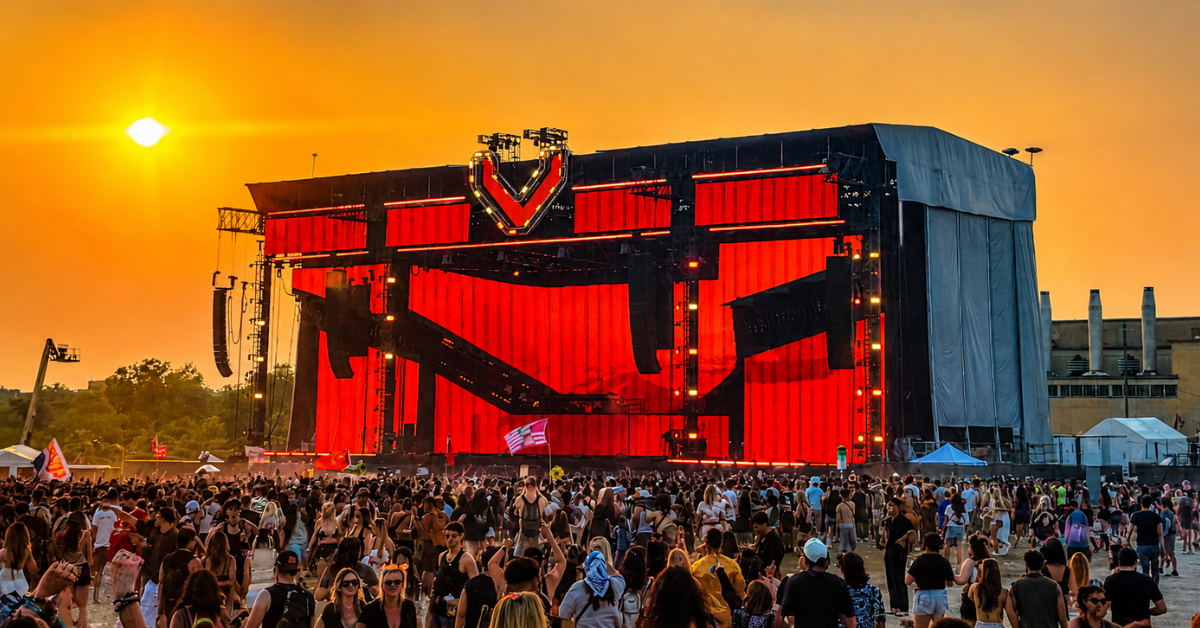
Canada’s live music industry is a heavyweight. The broader live music sector — concerts, festivals, electronic dance music, and everything in between — contributes billions to the national economy every year. But that’s the whole scene. What happens when we zoom all the way in on a single event? What does VELD Music Festival’s three-day takeover of Downsview Park actually pump into Toronto?
Let’s do some PLUR math.
What Goes Into Staging VELD Music Festival?
Before we get to the sweet spot — how much VELD makes for pulling off one of the biggest EDM weekends in the country — it helps to look at the topline operational costs. You can’t appreciate the festival’s contribution to Toronto without first appreciating what it takes to build it. Here’s the breakdown across the classic three P’s: product, place, and promotion.
Product: The Experience (and the DJs Who Power It)
VELD’s ultimate product is the experience. But that experience is built on one non-negotiable element: the lineup. The international DJs the organizers fly in are the single biggest reason people keep coming back year after year.
Since launching in 2012, VELD has hosted a who’s-who of the scene — from OGs like deadmau5, Steve Aoki, Armin van Buuren, and Alesso to the artists defining the sound right now. The 2026 edition alone features more than 50 acts, headlined by Above & Beyond, Armin van Buuren, FISHER, Illenium, and KX5 — the return of deadmau5 and Kaskade performing back-to-back under their joint alias. Rising and established names like Mau P, Sara Landry, Charlotte de Witte, and Subtronics round out a stacked bill across the Main, Bass, and Sirkus stages.
Booking talent like this isn’t cheap. Publicly floated fee estimates (which are rough, often dated, and vary wildly by market and set length) give a sense of the scale: mid-tier touring DJs can command tens of thousands per performance, while a top-of-the-marquee headliner’s guarantee can climb into the hundreds of thousands — sometimes approaching seven figures for a marquee, festival-closing slot. Multiply that across 50-plus artists and you’re looking at a serious talent investment before a single ticket is scanned.
Place: Downsview Park
Since its inception in 2012, VELD hasn’t changed homes — Downsview Park. (What has changed is the format: VELD started as a two-day event and only expanded to its current three-day structure in 2022.)
Publicly listed rental rates for the park are surprisingly modest on paper — venue day-rates for events run in the low thousands, plus additional fees for ingress and egress days. But those base figures barely scratch the surface. Dressing a raw green field into a multi-stage festival built to move tens of thousands of people daily — the stages, LED walls, sound rigs, fencing, security infrastructure, medical stations, water stations, power, and everything else — is where the real money goes. The land is cheap; the buildout is not.
Promotion: Getting the Word Out
Marketing spend varies year to year depending on how aggressively the organizers want to grow the audience. VELD has consistently shown up across digital, social, and out-of-home/transit placements throughout the GTA. The exact budget isn’t public, but a campaign of that reach — running for months ahead of the event — represents a meaningful line item in the overall spend.
Estimating Ticket Revenue at VELD
Now for the fun part. Let’s build a defensible estimate.
Reliable listings put VELD’s daily capacity in the range of 30,000 to 42,000 attendees per day — not the 100,000-per-day figure that sometimes gets tossed around (that number, where it appears, refers to cumulative weekend attendance, and even then it’s on the optimistic end).
If we take a mid-range daily draw and factor in a blend of three-day passes and single-day tickets across tiered pricing (GA through VIP), the weekend gross on tickets alone plausibly lands in the tens of millions of dollars. To put a rough frame on it: at an average blended ticket value of roughly $425 and cumulative weekend attendance in the six figures, a ticket gross in the $30–45 million range is a reasonable back-of-the-napkin estimate — with the emphasis firmly on estimate.
And tickets are only part of the picture. Add revenue from locker rentals, food and beverage, VIP bottle service, and sponsorship, and the total climbs further. VELD has historically partnered with major brands — the likes of SiriusXM Canada, Red Bull, and various spirits sponsors (Rémy Martin and Hennessy have both lent their names to stages in past years) — and those deals bring in real money on top of the gate.
The Notable Take
Earning this kind of money might look easy from the outside. It isn’t. Reaching the point where a festival becomes a genuine landmark — a Canadian summer destination that pulls fans from across the country and beyond — took INK Entertainment more than a decade of building, iterating, and reinvesting. And the economic ripple runs well past the box office: the festival generates seasonal employment, drives hotel and hospitality spending, fills transit, and feeds an ecosystem of vendors and local businesses every August.
VELD has helped shape a genuinely Canadian EDM culture, one that’s moved millions of festivalgoers across generations. And it’s poised to keep being the melting pot of the scene for a long time to come.
Figures in this piece are estimates drawn from publicly available sources and are intended for illustration. VELD does not publish its operating budget, attendance, or revenue. Lineup details reflect the 2026 edition (July 31–August 2, Downsview Park).