
Buying a Ford Mustang is supposed to feel like a reward—a statement car, a status symbol, a big-ticket purchase you can be proud of. So it stings a little when the newest headline about your car isn’t about horsepower, but about a recall. That’s the reality many owners are facing after Ford’s latest safety action, which affects the Mustang, Mustang GTD, and Mustang Mach-E.
Ford recently announced two new U.S. safety recalls affecting a combined 110,626 vehicles. The first covers 67,842 Mustang and Mustang GTD models (2024–2026 Mustang; 2025–2026 GTD) due to a windshield wiper software issue that could reduce visibility in cold weather. The second affects 42,784 Mustang Mach-E SUVs from the 2021–2023 model years, because the rear differential pinion shaft may fracture—potentially causing a loss of drive power or unintended vehicle movement if the car is parked without the parking brake applied. Ford says dealers will repair the affected vehicles free of charge.
The latest action adds to another significant year for Ford recalls. As of early July 2026, Ford has issued approximately 56 recall campaigns covering more than 11 million vehicles in the United States—far ahead of the next-closest automaker, General Motors, at 19. This follows a record-setting 2025, when the automaker issued 153 recall campaigns covering nearly 13 million vehicles—the highest number of recall campaigns by any automaker in a single calendar year. While Ford has launched fewer recall campaigns so far in 2026, the number of affected vehicles is already approaching last year’s total, because several recalls have each involved hundreds of thousands—or millions—of vehicles.
Why Does Ford Keep Leading the Industry in Recalls?
The latest Ford Mustang recall raises a much bigger question than whether owners should schedule another trip to the dealership: why does Ford continue to lead the auto industry in recalls?
At first glance, it’s easy to assume the company is suffering from declining manufacturing quality, cost-cutting, or unreliable suppliers. However, the publicly available evidence paints a more nuanced picture.
One of the biggest changes in today’s automotive industry is that vehicles have become computers on wheels. Modern cars contain hundreds of electronic modules and millions of lines of software code controlling everything from windshield wipers and cameras to braking systems and power delivery.
Many of Ford’s recent recalls reflect that shift. Rather than being caused by catastrophic engine or transmission failures, numerous campaigns have involved software controlling rearview cameras, digital instrument clusters, trailer brake controllers, lighting systems, over-the-air updates, and now windshield wipers. As vehicles become more digitally connected, software defects can create safety risks just as significant as mechanical failures.
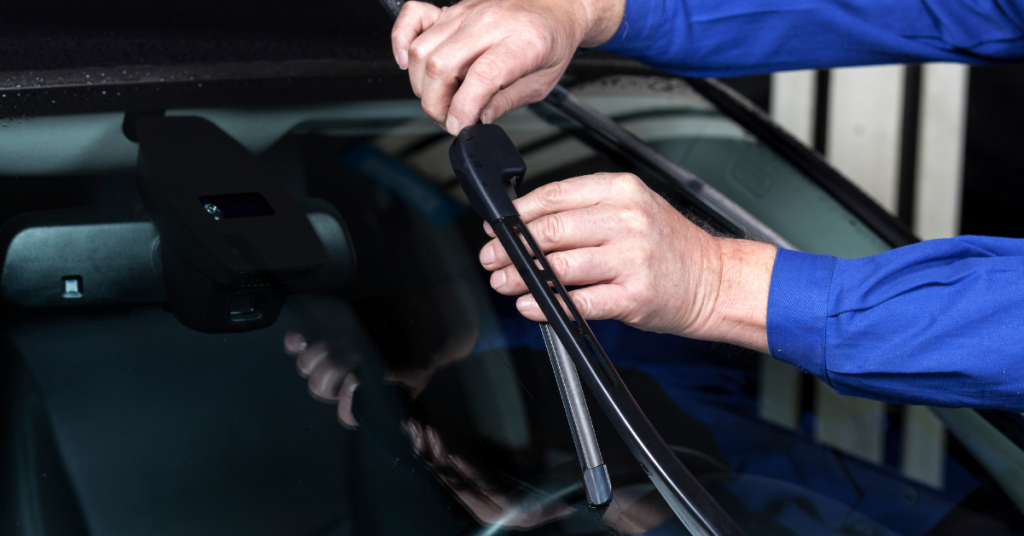
The latest Mustang wiper recall is a perfect example. The issue affecting more than 67,000 vehicles stems from a communication failure rather than a broken part: at temperatures of 32°F (0°C) or below, the wiper motor can lose Local Interconnect Network (LIN) communication with the steering column control module. When that happens, the wipers may operate only at their high-speed setting while the washer system fails to spray—a recipe for reduced visibility in exactly the weather where you need it most.
Increased Scrutiny Could Be Playing a Role
Ford’s recall numbers may also reflect increased regulatory oversight.
In late 2024, the U.S. National Highway Traffic Safety Administration (NHTSA) fined Ford $165 million—the second-largest civil penalty in the agency’s history, behind only the Takata airbag settlement—after determining the company had failed to recall vehicles with defective rearview cameras in a timely manner and had not provided accurate, complete recall information. As part of a three-year consent order, Ford agreed to strengthen its defect investigation process, improve recall reporting, review all recalls from the prior three years, and enhance engineering and data-analytics oversight, with an independent third party monitoring compliance.
That additional scrutiny means Ford is now operating under one of the industry’s most comprehensive recall compliance programs. While no company welcomes recalls, identifying defects earlier—even if it results in more public recall announcements—can ultimately improve vehicle safety.
Ford executives have also stated that the company intentionally expanded its quality engineering teams and testing procedures to detect problems earlier in the product lifecycle rather than after widespread failures occur.
Is There a Common Link?
One obvious question is whether these recalled vehicles are coming from the same factory, supplier, or manufacturing process.
So far, there is little evidence suggesting a single source is responsible.
The recalls span different vehicle platforms—including gasoline-powered Mustangs, the ultra-low-volume Mustang GTD, electric Mustang Mach-E SUVs, F-Series trucks, Bronco SUVs, and numerous other Ford models. They also involve entirely different systems, ranging from software and electronics to driveline components and mechanical hardware. The two Mustang recalls alone illustrate the point: a software communication fault in a gas coupe and a fracturing pinion shaft in an electric crossover share no part, platform, or powertrain.
That diversity suggests Ford’s challenges are broader than one problematic assembly plant or supplier. Instead, they may reflect the increasing complexity of designing, building, and validating modern vehicles that integrate sophisticated software with traditional mechanical engineering.
The Notable Consideration
Ford remains one of the automotive industry’s most iconic brands, with vehicles like the Mustang and F-Series helping define American automotive culture for generations. Yet its continued dominance in recall statistics inevitably raises legitimate questions for consumers.
Are today’s recalls evidence of declining product quality? Or are they the result of a company—and regulators—identifying problems more aggressively than in the past?
There is currently no public evidence that Ford’s recall volume is being driven by offshoring, widespread workforce reductions, or a single unreliable supplier. In fact, Ford has recently expanded engineering resources and strengthened quality oversight in an effort to reduce defects before vehicles reach customers. Notably, Ford topped J.D. Power’s 2026 Initial Quality Study among mainstream brands—a win it began advertising in July, even as the recalls kept coming.
Still, perception matters. When millions of vehicles are recalled year after year, consumers naturally begin to question whether quality control is keeping pace with increasingly complex vehicle technology.
As automobiles continue evolving into software-driven machines, the challenge facing Ford—and every automaker—may no longer be simply building reliable engines. It may be ensuring that every line of code performs just as reliably as every mechanical part beneath the hood.
How to Check if Your Ford Is Affected
If you own a Mustang, Mustang GTD, or Mustang Mach-E, don’t wait for a letter in the mail. Here’s how to confirm whether your vehicle is included:
- Find your VIN. Your 17-character Vehicle Identification Number is on the lower driver’s-side corner of the windshield, on your registration, or on your insurance card.
- Run a free VIN check. Enter your VIN at the NHTSA recall lookup page (nhtsa.gov/recalls) to see every open recall tied to your specific vehicle.
- Note the campaign. Ford’s internal number for the wiper recall is 26C32. Having it handy can speed up your dealer conversation.
- Book the free repair. All recall work is performed at no cost by any authorized Ford dealer, and can usually be scheduled alongside routine service.
- Questions? Ford’s customer service line for recall inquiries is 1-866-436-7332.
If you drive an affected Mach-E, one simple habit matters while you wait for the fix: always engage the parking brake, since the defect can allow the vehicle to move when parked without it.
Frequently Asked Questions
Which Ford models are part of the latest recall? The recall covers 2024–2026 Ford Mustang and 2025–2026 Mustang GTD models (windshield wiper issue), plus 2021–2023 Mustang Mach-E SUVs (rear differential pinion shaft).
How many vehicles are affected? 110,626 in total—67,842 for the wiper recall and 42,784 for the Mach-E driveline recall.
Is the recall repair free? Yes. Ford dealers will inspect and repair or replace the affected components at no charge.
How do I know if my specific car is included? Enter your VIN at nhtsa.gov/recalls for an instant, free check tied to your exact vehicle.
Should I keep driving my Mustang or Mach-E? Ford has not issued a stop-drive order. For affected Mustangs, use extra caution in freezing weather; for affected Mach-Es, always set the parking brake until the repair is complete. When in doubt, contact your dealer.
Why does Ford have so many recalls? A mix of factors: more software-driven components that can fail in new ways, heightened regulatory scrutiny following a 2024 NHTSA consent order, and expanded internal quality monitoring that catches defects earlier—resulting in more public recalls, not necessarily worse cars.
Learn more about the latest, subscribe to our newsletter via www.notablelife.com.