Brittany P.
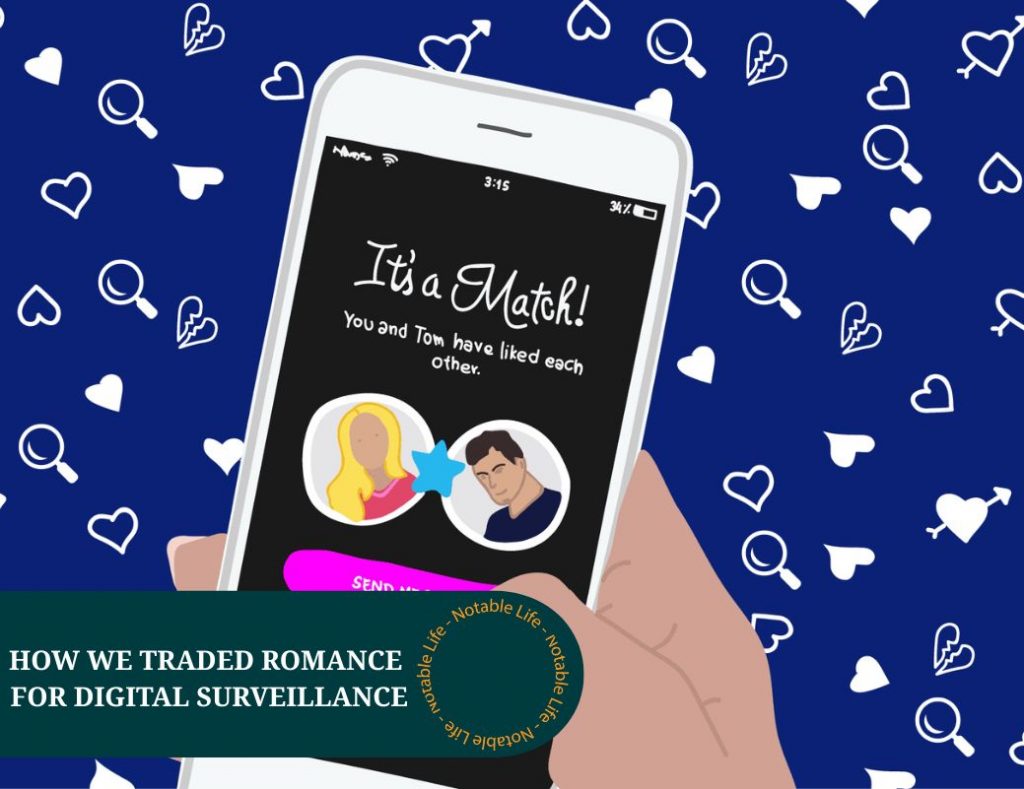
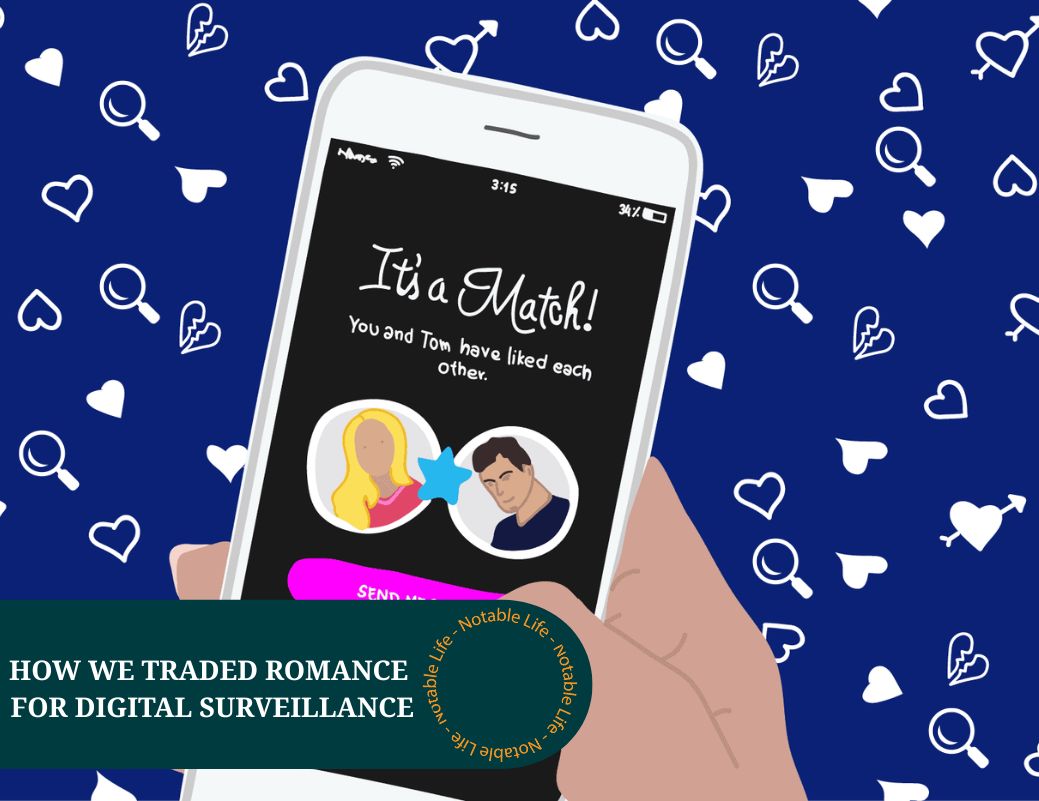
Dating apps have ruined dating. Or at least, they’ve rewritten it so thoroughly that the old version feels medieval – like something our parents swore once existed, explaining how things used to work.
They’ve made us socially strange. Not incapable of connection, but closed off, weird and over-calibrated. Always aware that there might be something, or someone, one swipe away.
We carry an entire catalogue of potential partners in our pockets…. Seeing this spelled out is kind of creepy, strange, but also hopeful, and helpful?
The Revolving Door Romance
There was a time, not long ago, when walking away from someone meant actual distance. If you broke up, you broke up. You didn’t see their new haircut, their new inside jokes, or the person who replaced you. You didn’t know who liked their latest photo because there was no latest photo to inspect.
Breaking up used to be clean. Brutal, yes. But clean.
Now? Now it’s forensic.
We don’t just lose someone. We audit the loss. We scroll through their following list like detectives. We track the new girl, the new guy, the suspiciously frequent liker. We watch their stories. We analyze the timestamps. We cross-reference emojis.
Closure has been replaced by surveillance.
And dating apps intensify this feeling. Because even when we’re nursing a bruise, we know we could download a new beginning before dinner.
And no – just because someone liked your story doesn’t mean they want to get back together.
The Exit Is Too Close
In theory, having options is empowering. For a long time, people were stuck in small towns, in narrow social circles, in relationships they couldn’t leave because there was no visible alternative.
Now there is always an alternative, and truthfully, I think that’s the problem.
The friction that once forced us to work through discomfort is gone. The small misunderstandings that once required conversation now require only a thumb. Slight incompatibility? Swipe. Slight boredom? Swipe. Slight insecurity? Swipe.
It’s not that we don’t care. It’s that we don’t have to try very hard.
Why sit in the discomfort of fixing something when you can download someone new? Why learn to communicate through conflict when you can outsource chemistry to the algorithm?
The Scarcity Mindset, the Infinite Buffet
We live in a culture that constantly tells us there isn’t enough.
Not enough money. Not enough time. Not enough success. Not enough security.
But there is one resource that appears infinite: potential romantic partners.
Scroll long enough, and you will believe there are thousands, millions, of people who could want you. Who might want you more? Who might be taller, funnier, more aligned, more emotionally available, more interesting. An endless buffet of possibilities.
And when everything feels available, nothing feels urgent.
We don’t put our feet down. We hover. We half-invest. We keep a mental “what if” tab open in the background. We don’t commit to building something because we’re afraid of missing something.
Choice, when it becomes excessive, doesn’t liberate us. It betrays us.
Disposable People, Disposable Feelings
The quiet tragedy of dating apps isn’t just ghosting or flaking; it’s also the feeling of being left behind. It’s the way they subtly train us to see people as profiles first, humans second.
A photo. A prompt. A height. A job. A playlist.
We assess in seconds what would once have taken months to discover. We filter for red flags before we’ve heard a laugh. We reject based on vibes that might simply be shyness.
And when someone disappoints us, the cost of walking away is minimal. No shared friend group. No awkward run-ins at the grocery store. No social consequence.
The system encourages disposability.
It’s easier to end things because we haven’t risked enough to make it hurt.
Which brings me to something that feels almost embarrassing to admit: I don’t remember the last time I was truly upset over someone I liked, or felt any sort of romantic loss.
Not because I’ve become enlightened. Not because I’ve healed and become this century’s Ghandi, but because I know, somewhere in the back of my mind, that I could be on a date within the next hour if I really wanted to.
Why grieve deeply when you can distract quickly?
The Death of Longing
Longing used to be part of romance. The not-knowing. The waiting. The wondering if they’d call. The time between encounters that allow feelings to expand and echo.
Now, if someone doesn’t respond, we assume they’re busy entertaining another match. If they hesitate, we assume they’re exploring their options. And because we are, too.
We are less sad. But are we less connected?
There’s something suspicious about how efficiently we move on. It feels evolved, resilient, and mature. But sometimes I wonder if it’s just avoidance in better packaging.
We’ve optimized the early stages of dating so well that we’ve removed the risk required for depth.
Are We Actually Worse at Love?
Dating apps didn’t invent flakiness, ego, or fear. They just industrialized it.
They gave our worst impulses a user-friendly interface.
But they also gave shy people access. They expanded social circles. They made it possible to meet someone outside your bubble. They democratized romance.
So maybe the apps aren’t the villain. Maybe they’re just amplifying who we already are.
The real question is whether we’re brave enough to resist the convenience.
To stay when it’s slightly uncomfortable.
To talk when it would be easier to disappear.
To stop scrolling long enough to see the person sitting across from us.
Because the endless supply of potential suitors isn’t an abundance.
All Of This To Say…
Maybe dating apps haven’t ruined dating.
Maybe they’ve revealed how terrified we are of choosing.
And in a world where you can always swipe again, choosing, truly choosing, might be the most radical act of all.