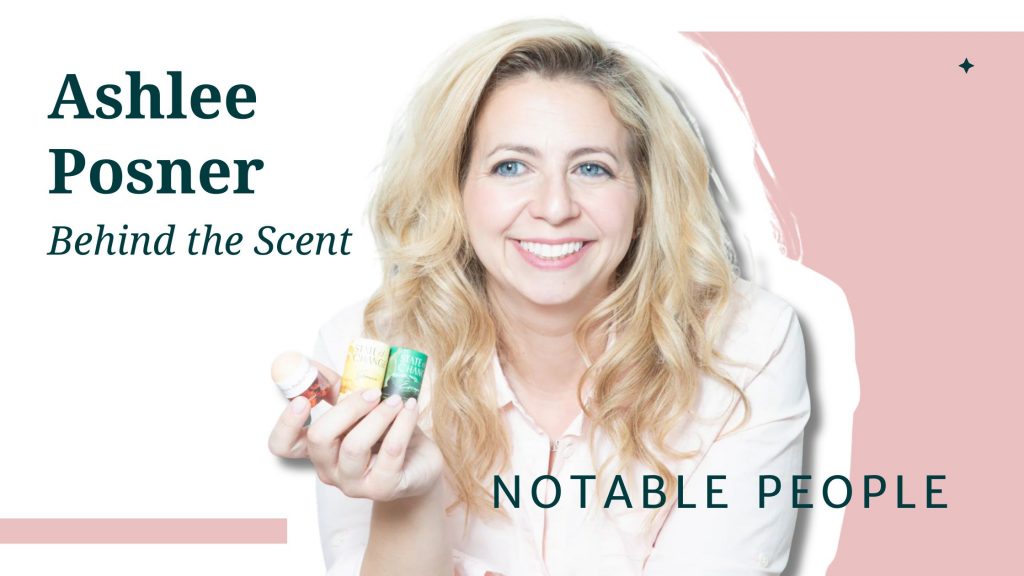
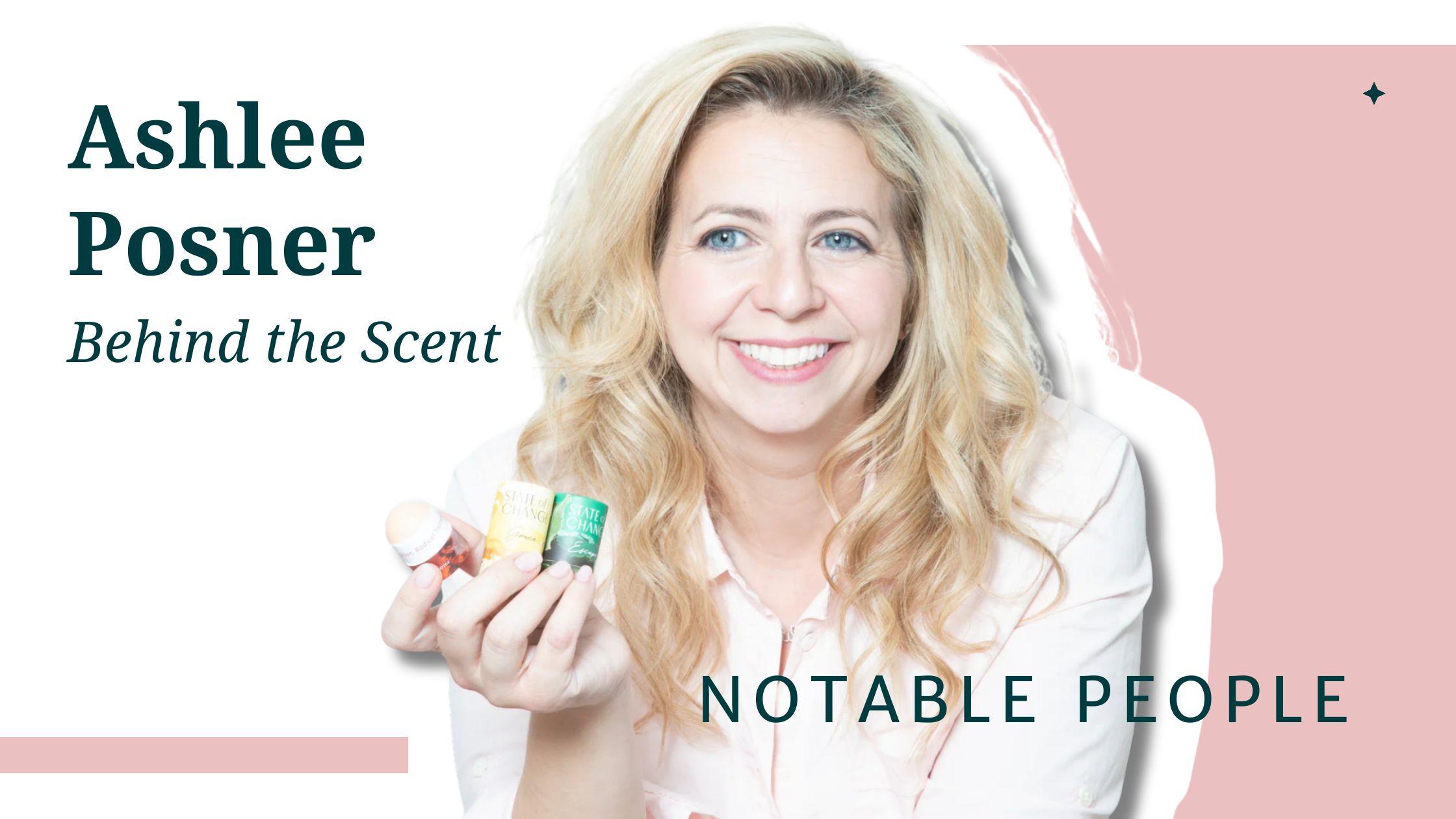
For Ashlee Posner, fragrance is not just about smelling pretty; it is about shaping emotion, memory, and state of mind. As her experience in the fragrence industry grew, she began to understand the insidious elements hidden behind the single word “fragrance”. In response, Ashley founded Lucént to build a new model for the fragrence industry that prioritizes transparency, safe ingredients, genuine validation, and ultimately creates better products and stronger economics.
The Moment of Realization
You spent 15 years inside the fragrance industry. Was there a specific moment when you realized: this system isn’t working, and someone needs to change it?
The real turning point came when I was pregnant. I owned a fragrance company, but I personally avoided products that simply listed “fragrance” on the label because I was uneasy with how little disclosure existed behind that one word. That experience pushed me to look much more closely at the supply chain. What I uncovered was a problem bigger than transparency alone: a lack of validation around ingredient decisions and an antiquated infrastructure that made safer product development far harder than it should be. I realized the issue was not only what consumers were being told, but how the entire system had been designed.
The Industry’s Open Secret
You’ve said that a single fragrance can hide hundreds of undisclosed ingredients. How? And, why has the industry been able to operate this way for so long—and why hasn’t there been more pushback?
Fragrance formulas are protected as trade secrets, so a label can simply say “fragrance” or “parfum” instead of disclosing the dozens or even hundreds of materials inside. Over time, that part of the supply chain became deeply opaque—fragmented, lightly validated, and far removed from the brands and consumers relying on it. That is why the word “fragrance” now creates so much hesitation. If a brand does not truly know what is in the blend, it becomes very difficult to confidently stand behind its safety or standards.
The system lasted this long because secrecy was seen as essential to protecting creativity and IP. But that same secrecy also created a growing disconnect between formulation, accountability, and trust. A small number of large players still control much of the industry, while smaller brands—many of which are driving the demand for safer, healthier products—have had little support in navigating a better way forward. Consumers are more informed, more skeptical, and asking sharper questions. The infrastructure has not kept up, and that is exactly what needs to change.
From Insider to Disruptor
What’s the biggest mindset shift you had to make when going from working within the industry to building a brand that challenges it?
I have always had a questioning personality. I tend not to accept things at face value, especially when the answer is, “that’s just how it works.” I already had a fragrance business, and once I started asking deeper questions of my fragrance house and was told, “that’s not how the industry works,” I knew there was much more to uncover.
What I could not accept was that brands trying to build better, safer products often felt forced to remove fragrance altogether to stand behind what they were making. Once I really understood the supply chain, it became clear to me that the problem was bigger than any one formula or one brand. The model itself was antiquated. It was not built to support the kind of products brands are trying to create today, or the level of transparency, validation, and accountability that consumers now expect.
That was the mindset shift: moving from trying to navigate the existing system to realizing a new model had to be built. What started organically, with brands in adjacent categories asking for help, quickly grew into something much bigger. It became clear there was real demand for a modern infrastructure that could support how products need to be built today and Lucent was born.
The Hard Trade-offs
When you commit to safer ingredients, traceability and sustainability, what compromises or challenges does that create in terms of performance, cost, or creativity?
You reduce the universe of materials you can work with. But having built a meaningful number of formulations already, we have seen that our palette is still able to support most major creative and olfactive categories.
Once you unlock true transparency into formulation, you move away from the outdated assumption that “all natural” automatically means safer—which it does not. That opens the door to using nature-identical and synthetic ingredients that are better validated for human health. In many cases, those materials are also more economical. So rather than creating a trade-off, this approach can actually become a major advantage.
In the end, better formulation can also mean better pricing and better economics, which is part of what makes this shift so compelling. There are still categories that are more challenging—musks are a good example, where the palette is currently more limited. But that is also where I think the future is exciting. We hope to be part of pushing material innovation forward, and are already working with partners who are investing in that next generation of ingredients.
Fragrance as a Ritual
You describe your scents as a way to pause and reflect your “state of mind.” How did you come to see fragrance as more than just a product—but as a daily ritual?
Scent has a unique ability to shift how we feel almost instantly. It is invisible, emotional, and deeply tied to memory. For me, fragrance was never just about smelling good. It was about marking a moment, grounding yourself before a meeting, resetting after a hard day, stepping into a different version of yourself. The best fragrance experiences are not just decorative; they are intentional. They create a pause. In a world that moves very fast, that small sensory moment can become a meaningful daily practice.
What Consumers Don’t Realize
From everything you’ve seen behind the scenes, what would shock most people about how traditional fragrances are made or marketed?
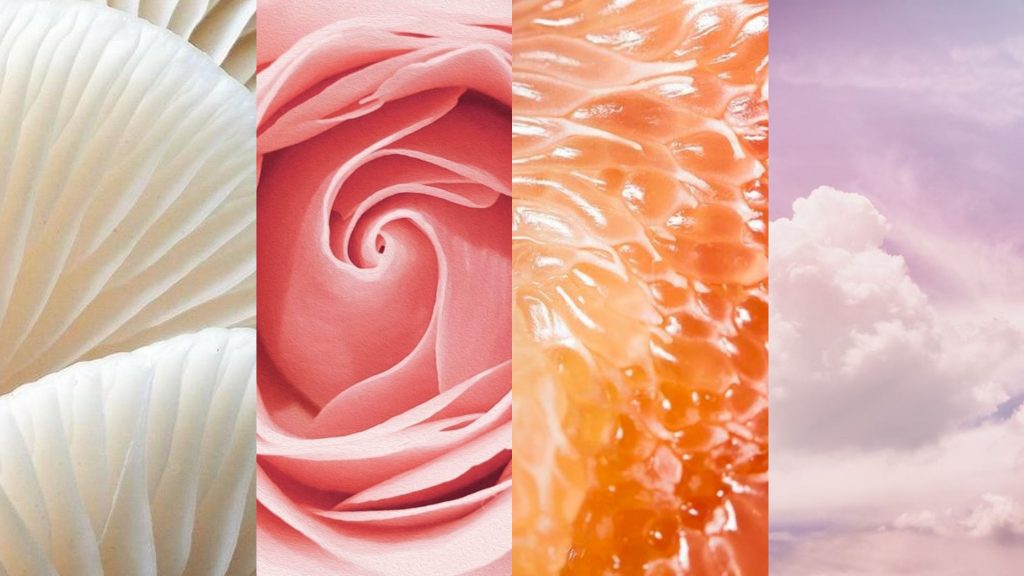
What would surprise most consumers is how much of the fragrance story they see in marketing is exactly that—a story. Because there is so little transparency into the actual materials, a product can be named “rose,” for example, without containing rose or even a true rose note in any recognizable way. That disconnect is part of why consumers often do not know what specific fragrance materials actually smell like. There is very little real connection between the language used to market a scent and the underlying composition itself.
The other thing that would surprise people is how antiquated the fragrance supply chain still is, both culturally and operationally. A small number of major players have dominated the industry for a long time, and that has left relatively little room for disruption. As a result, much of the system still runs on legacy workflows that were not built for the level of transparency, validation, and speed brands need today.