This isn’t your ordinary food review for Makilala, a Filipino restaurant in downtown Toronto that serves authentic Filipino food and culture – giving everyone the authentic taste of the Philippines and its people. It’s a personal take based on the author’s experiences and preferences, particularly when it comes to all things Pinoy (a colloquial term for Filipino).
When it comes to eating out, I’m particularly picky about Filipino food, as I have a strong point of reference for its authenticity and can easily prepare many of these dishes myself. So, when I learned that Makilala was helmed by acclaimed Thai chef Nuit Regular, alongside her Filipino husband and business partner Jeff Regular and his brother Joel, I was both intrigued and admittedly a little skeptical. After all, the team behind Toronto favourites PAI, Kiin, and Sukhothai certainly has an impressive culinary pedigree, but would that translate into an authentic Filipino dining experience? Knowing that Chef Nuit had spent years learning Filipino recipes from her husband’s family made me even more curious. With my expectations set high and my Filipino palate ready to judge, I went in with an open mind. And Makilala did not disappoint. Here’s why.
Makilala Is a Love Letter to Traditional Filipino Culture
I immediately fell in love with Makilala’s interior the moment I stepped inside.
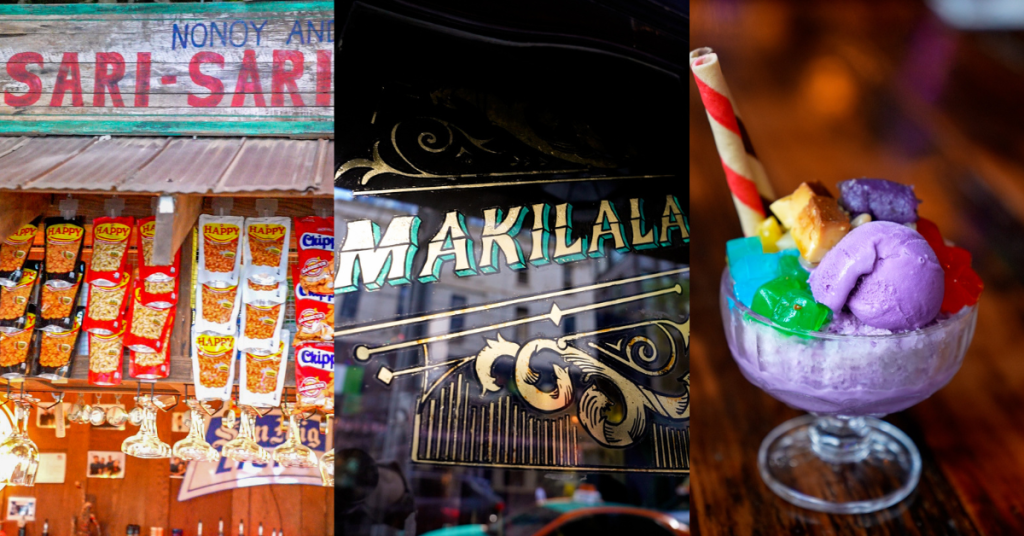
From the bar designed to resemble a traditional sari-sari store (a Filipino neighbourhood convenience store), complete with familiar chips, candies, and other nostalgic treats, to the trinkets and vintage posters scattered throughout the space, everything felt reminiscent of Filipino life in the 1980s and 1990s. Even the tables and rattan chairs gave off that classic tahanang Pinoy (Filipino home) atmosphere.
But my favourite detail, and perhaps the most subtle expression of Filipino culture in the entire restaurant, was the sign that read “Comfort Room (CR).” For those unfamiliar, Filipinos commonly refer to washrooms as comfort rooms, or simply CRs.
It’s one of those small cultural habits you don’t realize you’ve carried with you until you move to another country. I can only imagine how many Filipino newcomers to Canada have made a conscious effort to replace “CR” with “washroom” in their everyday vocabulary. Seeing that sign genuinely made me smile. And sometimes, it’s these little details that make a place feel like home.
Notable Makilala Dishes
Now comes the true heart of this Makilala review: the food.
Makilala positions itself as a celebration of Filipino cuisine, and I approached its menu with an open mind, but also with the admittedly demanding palate of someone who grew up eating these dishes.
I firmly believe that being Filipino doesn’t automatically make someone an excellent Filipino cook. Authenticity requires more than familiarity with the ingredients. It takes a genuine understanding of flavours, techniques, and the cultural significance of the food. So, how did Makilala fare?
Ginataang Langka — 10/10
Serving size: 2–3 people
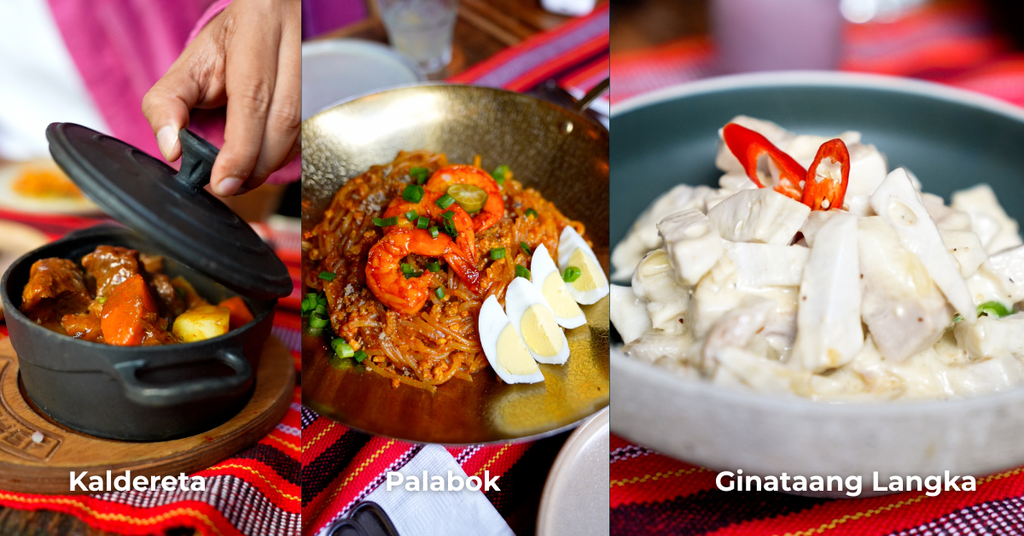
I’ll start with my absolute favourite: Ginataang Langka. This dish genuinely took me home.
It reminded me of my elementary school days when my father would pick us up for a quick lunch at home. We’d spend that short break eating together while watching his favourite noontime television show, Eat Bulaga! It’s a simple memory, but one that came rushing back with the very first bite.
Ginataang Langka is a Filipino stew made with young jackfruit simmered in coconut milk, a familiar dish on many Filipino dining tables. Makilala’s version delivered exactly the comforting flavours I remembered. The richness of the coconut milk brought a delicate creaminess, while the jackfruit offered a hearty texture and subtle earthiness that made every bite satisfying.
I chose pork as my protein, although Makilala also offered tofu and shrimp options. For me, this was easily the highlight of the entire meal. And if a dish can transport you thousands of kilometres back to your childhood, I think that’s worth a perfect score.
Bulalo — 9/10
Serving size: 2 people
I visited Makilala with a non-Filipino colleague, which made the dining experience even more interesting. I specifically chose Bulalo for him instead of the more internationally recognizable Sinigang, the Filipino sour soup.
Don’t get me wrong, Sinigang deserves its popularity. But I believe Bulalo deserves just as much recognition. Traditionally prepared with beef shank and bones, Bulalo is known for its rich, savoury broth and deeply comforting character.
Makilala’s version certainly delivered on that promise. The broth was flavourful and satisfying, with a beautiful balance of savoury notes and a subtle sweetness from the corn.
For my colleague, this was easily his number-one dish of the meal. He described it as the perfect comfort food when you’re feeling unwell or simply need something warm and nourishing. And I couldn’t agree more.
Palabok — 8.5/10
Serving size: 2–3 people
If there were an award for the most beautiful presentation among the dishes we tried at Makilala, Palabok would win. But beyond the plating, the dish delivered a bold combination of savoury, briny, smoky, and nutty flavours.
Palabok isn’t necessarily the first noodle dish that comes to mind when people think of Filipino cuisine. More often, it’s Pancit, the broad family of Filipino noodle dishes commonly associated with celebrations and family gatherings.
Makilala’s Palabok reminded me of the more elevated versions you’d find in upscale Filipino dining establishments. I particularly enjoyed the addition of tinapa (smoked fish), which added depth and a distinctly traditional Filipino character to the dish.
However, I have two observations.
First, I found Makilala’s interpretation closer to Pancit Malabon than the Palabok I grew up eating, particularly in its noodle choice and flavour profile. While the differences may seem insignificant to some diners, they’re worth noting for those familiar with both dishes.
Second, I would have loved a more generous finishing garnish of crispy chicharon (pork cracklings). That extra crunch would have taken the dish to another level.
Still, this was a well-executed plate of noodles that balanced tradition with a more refined dining presentation.
Kaldereta — 7/10
Serving size: 1–2 people
A few of my friends had spoken highly of Makilala’s Kaldereta, so naturally, I had to try it.
For those unfamiliar, Kaldereta is a Filipino beef stew traditionally prepared with a rich tomato-based sauce, vegetables, and, depending on the family recipe, liver spread, cheese, and chillies.
Makilala’s version was enjoyable and reminded me of a familiar home-cooked Kaldereta. But here’s where my personal bias comes in.
I grew up in a household where preparing Kaldereta was practically a competitive sport, especially during family celebrations. Everyone had their own twist, but I always preferred mine with the creaminess of cheese, subtle nuttiness of peanut butter, richness of liver spread, and a fiery kick from red chillies.
Makilala’s interpretation leaned towards a straightforward, tomato-forward beef stew. While enjoyable, I craved more richness and complexity. I also wasn’t particularly fond of the olives, which, although used in some traditional recipes, were never part of the Kaldereta I grew up loving.
Interestingly, my non-Filipino dining companion absolutely loved it. And perhaps that’s where Makilala’s Kaldereta shines. Its familiar, comforting flavours make it an approachable introduction to Filipino cuisine, especially for first-timers.
Ultimately, it comes down to personal preference rather than authenticity. It’s a solid Kaldereta I’d recommend to anyone curious about Filipino food, even if it didn’t quite win over my particular palate.
Halo-Halo — 8.5/10
Serving size: 1–2 people
No Filipino dining experience feels complete without Halo-Halo. And Makilala certainly didn’t hold back on the ingredients. I appreciated the variety of toppings, including the unexpected addition of pineapple, something I hadn’t personally encountered in Halo-Halo here in Toronto before. Surprisingly, it worked quite well.
But the standout was undoubtedly the ube ice cream. It was wonderfully creamy while retaining that distinct, earthy sweetness of real ube. Both my colleague and I agreed that it was the highlight of the dessert.
My only thought was the texture of the shaved ice. Compared with some of my favourite Halo-Halo establishments back in the Philippines, where the ice is shaved so finely that it almost resembles ice cream, Makilala’s version was noticeably coarser (which is common in Toronto).
But interestingly, that texture brought another wave of nostalgia. It reminded me of the Halo-Halo I enjoyed growing up in the 1990s and early 2000s, when traditional manual ice shavers were commonplace. So, even what I initially considered a shortcoming became part of the experience.
Makilala Honourable Mentions: Pandesal, Puto, and their surprise refreshments
Before wrapping up, a few appetizers at Makilala deserve special recognition. The Pandesal and Puto were excellent, delivering familiar flavours and textures reminiscent of traditional Filipino bakeries.
The Pandesal, in particular, deserves applause. Soft, airy, and beautifully baked, it was easily one of the most authentic I’ve tried in Toronto.
What made Puto even more interesting were the accompanying durian and caramel butters. Having avoided durian for most of my life, I reluctantly gave it a try. And thankfully, I survived!
Surprisingly, the flavour was subtle, with just enough durian character to make it interesting without being overwhelming. Even for a longtime durian skeptic like me, it was genuinely enjoyable.
Also worth mentioning were the refreshments served at the beginning of our meal: Ube Fizz and Calamansi Soda. I initially thought I’d favour the Calamansi Soda, having grown up drinking calamansi juice. But the Ube Fizz proved me wrong. I found myself sipping it endlessly, enjoying its creamy, nutty flavours and delicate fizz that gently caressed my palate. It was a refreshing and delightful way to start lunch.
Is Makilala Notable or Not?
The verdict: Makilala is definitely Notable.
What makes Makilala worth visiting isn’t simply the food. It’s the thoughtfulness behind the entire experience.
From the nostalgic interiors and familiar Filipino expressions to the carefully prepared dishes, the restaurant captures something that isn’t always easy to recreate outside the Philippines: a sense of belonging.
And while not every dish perfectly matched my personal preferences, I appreciated how Makilala represented Filipino cuisine with care, confidence, and cultural pride.
For Filipino diners, Makilala offers an opportunity to reconnect with familiar flavours and memories. For non-Filipino guests, it’s an inviting introduction to the country’s rich culinary traditions.
Whether you’re planning a meal with Filipino friends and family or introducing someone to Filipino food for the first time, I would happily recommend giving Makilala a visit.
Because for me, Makilala is more than just another Filipino restaurant in Toronto. It’s a place that represents a part of who I am, and one I can proudly recommend.
Subscribe to our weekly newsletter to learn more about trends in Canada.